Is It With A Full Frame or Crop Frame Camera?
For many photographers... shooting
macro is all they do. When I first began my camera journeys back in the 70's, I too was fond of shooting mostly macro scenes. With every brand of camera gear I ever had, I made sure a
prime macro lens was in my bag.
My most recent macro project is about finding the "
Ultimate Macro" set-up. Although I did have a
macro study in issue #2, that was an overall look at differences you will find in shooting macro with multi-purpose zooms,
prime macro lens's and extension tubes.
That
project study pretty well affirms the way I like to shoot macro. Recently, I have really boosted my shooting pace of my die-cast collection recently, and I have tried many different combinations of glass. I have decided I prefer shooting with my prime macro glass the
Nikkor 60mm micro.
Now A New Question Comes To My Mind....
Since the
DX (crop frame) format camera would seem like it was
capturing an image closer up than the full frame, I wondered if moving back from the subject to have the same enlargement/aspect ratio of the subject to be the same as you get with the FX format camera. Then compare the DOF (
depth of field) of the two seemingly same images but actually shot with two different
sensor sizes.
I have also been using macro images in some of my most recent works. My entire series of "
Whimsical Works" is almost entirely from macro glass or presented in a way it seems like macro. Although the subject matter in my Whimsical Works Series is a several inch tall
tin toy and it is a lot easier to get more of the subject in sharp focus.
For me, the most important thing I want in any of my captures is to have
maximum control of the DOF when possible.
I would rather soften up an image than try to sharpen what just really isn't there to sharpen.
As the
DOF falls off, the image just sort of blends from one color to the next creating a blur in which the subject can be isolated from the background rather easily.
Although there are two major differences in the type of macro you may shoot. Aside from the close up of something tiny that blurs out into s sea of colors and shapes in the background... there is also time when you shoot macro to
document an item and want maximum DOF throughout the image. Such as if you were capturing postage stamps or other basically flat subjects that can be captured completely in the
shallow range DOF available in macro photography.
My thought behind this project was the fact that with the crop frame camera I will be almost
double the distance away from the subject than with the FX camera. Which in turn, means the same scene will be in
focus with the
outer lens elements being closer to the optical center of the lens itself.

To keep some common points of reference amongst the test images, I shot both cameras at
ISO 800 and mostly at
f/25. Since this is a repetitive process in which I may shoot some cars on a spur of the moment, these will be with
available light. By using this standard of exposure, I can shoot confidently without having to peep at the images on the computer first to check for exposure details.
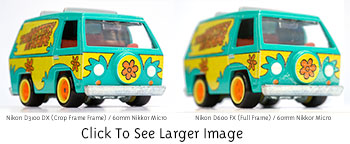
Beginning with this first straight-on side view... The distance from the front of the lens to the
subject is about 10" away with the DX camera and
only 5" distance with the FX camera.
When you observe the bigger version
you can see that the passenger side
vent window pillar is a lot softer focus in the FX example. Also notice how much sharper the
hood ornament and front passenger
tire outline compared to the FX image.
But... let's not hand the trophy over to the DX camera set-up as of yet. In this second blow up image shown you can see a definite
smoother grain and slightly sharper details. As in the third image in this set you will see that the range of DOF is pretty similar. Although it may not as noticeable on a
Hot Rod 24Mp DX camera as it is my older 14Mp D3100.
The
final use of the image will also come into play when making your choice of gear as well. Obviously if i wanted to print this image really large and display, I would tend to want to go with the FX image due to its extra sharpness and smoothness. Since the final destination for my die-cast images will be on the web only, I can use either FX or DX ... at least for the
straight-on shots.
 Let's Try The Angled Approach
Although the difference may not be so noticeable in a flat straight-on type image, it can be entirely different between FX and DX in the angled examples shown.
Apparently I was on the right train of thought about how using the same macro lens would produce a
broader range DOF in the DX format camera. There is a slight trade off, as there would be anything and as the center of focus becomes closer to the optical center of the lens, you also have to move the camera back away from the subject further than with the FX.
If choosing between both options, I certainly will be
shooting my cars with the
DX camera from now on. But due to the larger size of things like my
Tin-Toy Collection that make their way into gallery pieces, I will shoot with the larger
FX format. There again in part due to the camera not having to be within inches of the subject.
If you happen to catch my "
Photographing Orchids" project in Issue 4, you can note that in some parts of the scene you really need to be out of focus in orchid scenes. And yet the intricate details of the bloom
need to be at
maximum DOF to hope that at least 2/3's of the main subject is tack sharp.
 Flowers & Insects... Oh My
If you browse through many of the assorted FaceBook Photography Groups, you will notice a large amount of Flower and Insect
photos popping up everywhere.
Not only does the beauty of flowers and the minute details of insects intrigue our visionary senses, it also causes most
anyone with a camera to make photos of them.
With todays camera being able to shoot at
very high ISO with very little grain/noise, it allows you to shoot at
higher shutter speeds. But you still need a lot of extra sensitivity to shoot at something similar to an EV of 1/250 at f/22. For DOF you need that tiny
aperture, and along the way there will be some kind of sacrifice usually. Either in Shutter speed or aperture, each with a different outcome to a macro shot.
Just as amazed as we are of
insect macro photography, we are probably even more likely to have grabbed up a few
flower macro shots. Although you won't spook the flower and cause it to fly away... you do have to be always dealing with even the
slightest of a breeze. Especially back in the "
days of film" when you would have to shoot hand-held shots at least at 1/60 of a second and with a high speed ASA 400 film, you would still be
lucky to shoot at f/8.

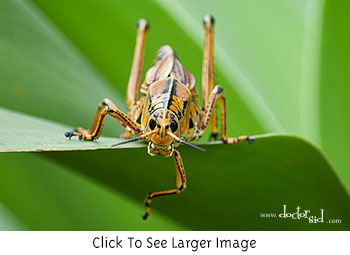
The examples shown here are a typical quick grab of flowers. A slight wind blowing and using an ISO of only 800. Back in the days of film, the ASA 800 film was
super grainy and
over-saturated.
Dealing with a little wind and camera shake, I shot these at 1/60 of a second but would have preferred at least
1/125. But that would have caused the
aperture to drop down to f/11, resulting in even more loss in DOF.
Again... if I had to choose which body I would shoot macro flower shots with, I would have to
favor the DX. In Issue 6, I had a project in which I compared the DX and FX formats. Even though the actual
sensor size is quite a bit different, the file size of a 24Mp DX & FX image are about the same at approximately
6000 x 4000 pixels.
With the cropped image, it will appear as if you can get closer to the subject. A highly debatable topic in itself, but it really don't matter. It's the
final image you get that matters.
If you are satisfied with it, then it really don't matter what the others think.
And The Winner Is...
If you know me and have read through some of my other projects, you know that the camera doesn't make the difference, except only to other photographers. You could have a point-n-shoot with a close up filter and get a great macro image. There is a myth amongst the camera industry now, that it's all about the camera and how many gadgets it has. When in reality, it's still just like in the days of film where the type of film, camera or lens
really didn't matter as much as the person capturing and presenting the image.
This
Photography Experience has caused me to rethink my camera choice from now on with certain projects.
When I am shooting my die-cast collection, flowers or other
very small subjects... the
DX camera it shall be. When capturing the larger subjects like my
tin toys, it will still be the
FX camera I use. One thing for sure is that I will stick with using the
60mm Micro lens, as I has shown to be a little sharper than the
multi-purpose macro zooms.


 Cover | About TPE | Previous Issues | Workshops | DoctorSid
 The Ultimate Macro Set-up